
History of the Town
Before we begin with the history of the Kysylyn Museum, it is worth mentioning Kysylyn itself, which was first recorded in historical sources on 9 November 1449. In 1580, Kysylyn was granted town status with the right to hold markets and fairs, which in turn attracted craftsmen and merchants of various nationalities. At the beginning of the 17th century, the town became one of the centres of Socinianism (a religious movement that rejected the dogma of the Trinity and was influenced by the early Christian ideals of Anabaptism). Later, the Raków Academy, a higher education institution founded in Raków by Protestant Unitarian Polish Brethren, moved here along with many of its teachers and students.
Following the partition of the Polish-Lithuanian Commonwealth, Kysylyn became part of the Russian Empire from the end of the 19th century. Numerous German and Czech settler colonies sprang up around Kysylyn. During the First World War, the front line ran through Kysylyn for almost two years, which is why the town was almost completely destroyed. After the war, Kysylyn, which had by then become part of the Republic of Poland, was rebuilt and the inhabitants who had been evacuated during the war returned to the town.
During the Second World War, two major tragedies occurred in Kysylyn – the ghettoisation and murder of the Jewish inhabitants by the German occupying forces, and an attack by the Ukrainian Insurgent Army on Polish worshippers in the Catholic church. The end of the Second World War marked another turning point. Kysylyn became part of the Soviet Union and lost its status as a town. Its multinational culture ceased to exist.
Kysylyn today
Today, the small village has around 300 inhabitants. There is a school, a nursery, a community centre, a post office, a medical centre, our museum, as well as historical monuments such as an Orthodox (formerly Greek Catholic) church from the late 18th century, ruins of a 17th-century Carmelite church and monastery, a Catholic cemetery (only a few old monuments remain in the Orthodox and Jewish cemeteries), a Holocaust memorial and several First World War bunkers. Furthermore, the area around Kysylyn boasts beautiful natural surroundings with many forests.
Museum
The rich, fascinating and multi-ethnic history of the area called for the creation of a museum. As early as the 1980s, there were several attempts to open a museum in Kysylyn, but these were unsuccessful. On 8 November 2023, local residents and their descendants opened our current Kysylyn Museum. We place great importance on collecting new exhibits and researching the history of Kysylyn. Over the course of more than a year’s work, we have managed to collect several hundred items relating to the region’s history. These include numerous originals and copies of old photographs, military artefacts from the First and Second World Wars, items from the era of the Polish Republic, objects from everyday life, artefacts from Jewish history, and so on. To spark the interest of locals and tourists, we have organised several events, such as workshops on researching family history, a lecture entitled ‘120 Years of Postal History in Kysylyn’, and three exhibitions: ‘Kysylyn and the Surrounding Area in Photographs from the First World War’, “Kysylyn on Maps from the 17th–20th Centuries” and “Letters from Eastern Workers from the Kysylyn Area”.
In the summer of 2025, a new season will begin, during which, in addition to our archival work, we will also start clearing the Catholic cemetery. We plan to undertake several expeditions to neighbouring villages to photograph old houses, record the memories of former residents, and so on. We have ideas for tourist signage for Kysylyn and the surrounding area and would like to create routes relating to the German colonists, the military history of the First World War, interesting natural sites, and so on.
Due to the Russian invasion of Ukraine, the implementation of many of our plans has been delayed or had to be postponed. For the same reason, the number of our domestic and international visitors is not as high as we would like. But we believe in a better future and will continue to explore our history!
Artur Alioshyn
More Informationen
Web: www.kysylyn.in.ua, facebook.com/kysylyn.museum
![[Translate to English:] Ruine der Karmeliterkirche aus dem XVIII Jahrhundert in Kysylyn](/fileadmin/user_upload/Kysylyn_Karmeliterkirche_c.jpg "Ruine der Karmeliterkirche aus dem XVIII Jahrhundert im Dorf Kysylyn")

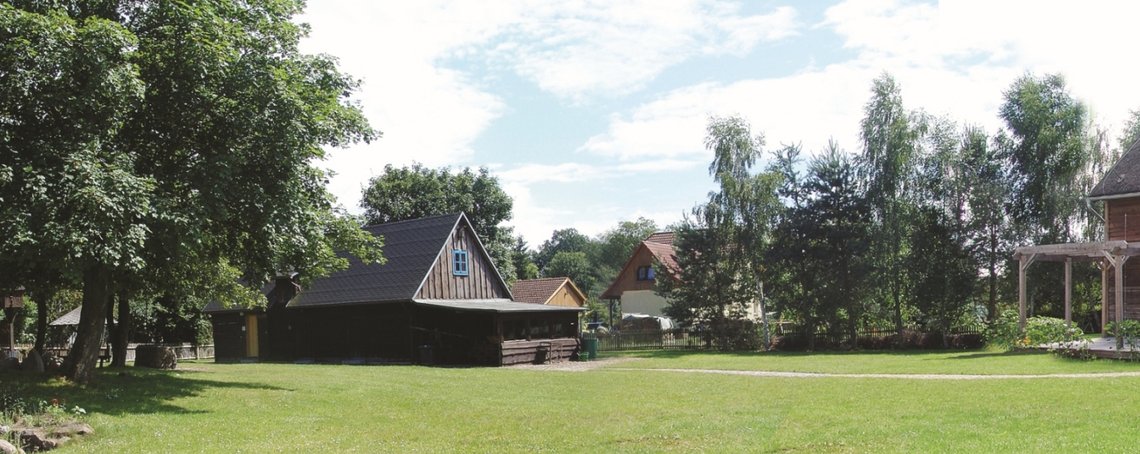
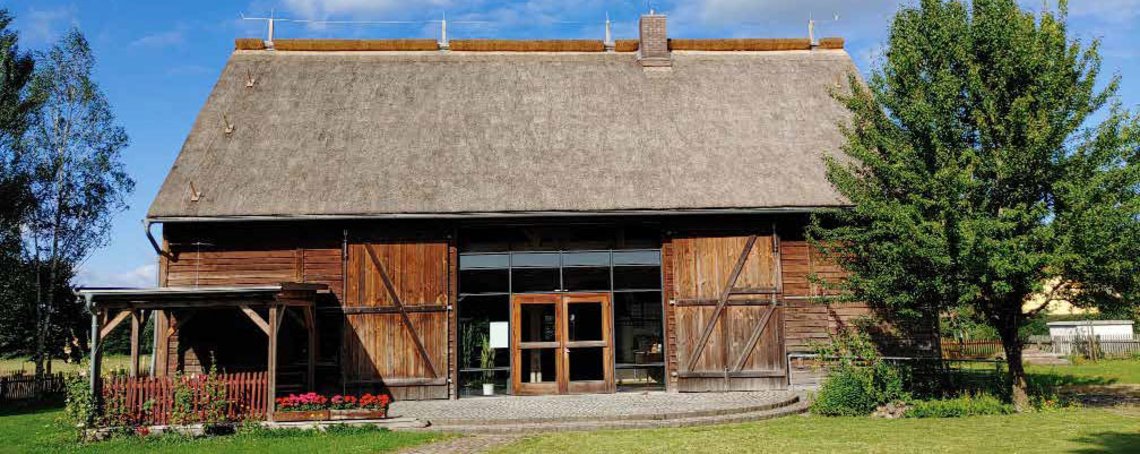
Following the resettlement of German settlers from Western Volhynia in connection with the Hitler-Stalin Pact, many artifacts commemorating their life in the region were destroyed. Villages were razed, and cemeteries were leveled to the ground. One exception is the former colony of Wincentówka, located about 30 km north of Lutsk in what is now northwestern Ukraine and now known as Zavitne. Some buildings erected by the settlers miraculously survived World War II and are still used by the village’s residents today. In December 2019, history enthusiasts from the region set up a museum room dedicated to German settlement.
German Colony of Wincentówka
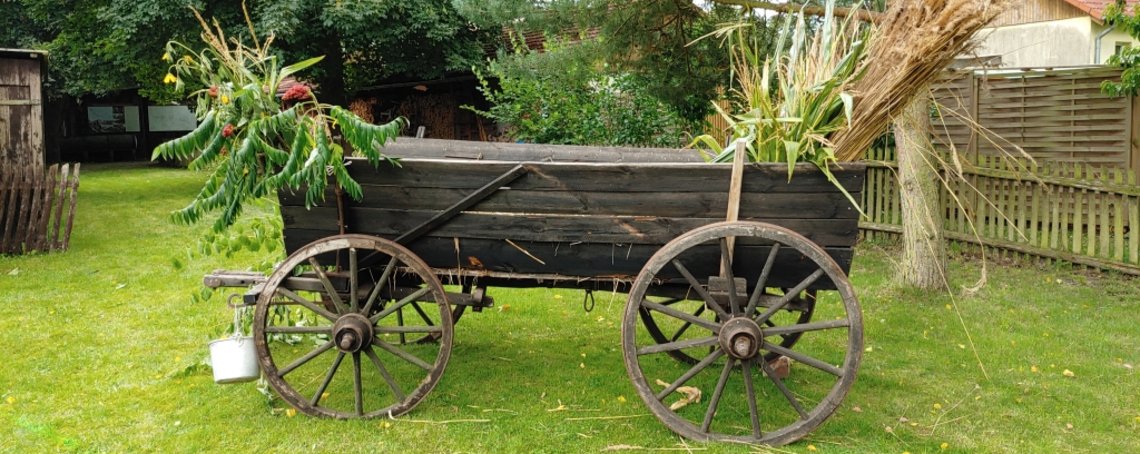
German families from Silesia, who initially worked as lumberjacks for local Volhynian landowners, founded the colony of Wincentówka in the early 19th century. After the forest was cleared, they remained in the area as small farmers. In addition to farming and raising livestock, they practiced horticulture and processed milk into butter and cheese. As skilled craftsmen, they made household items, tools, as well as horse harnesses and wagons themselves.
The German settlers were Lutherans and built a wooden prayer house in 1862, which also served as a school for their children. In 1929, they erected a stone church, which is now used by the Orthodox Church. According to the 1921 Polish census, 212 German settlers lived there.
Following the partition of Poland between the German Reich and the Soviet Union, the Germans from Wincentówka were resettled in the winter of 1939–40 in accordance with the German-Soviet Border and Friendship Treaty. The houses they vacated were initially occupied by forcibly resettled Ukrainians from the new German-Soviet border area. Later, additional Ukrainian families from the surrounding villages of Wincentówka joined them.
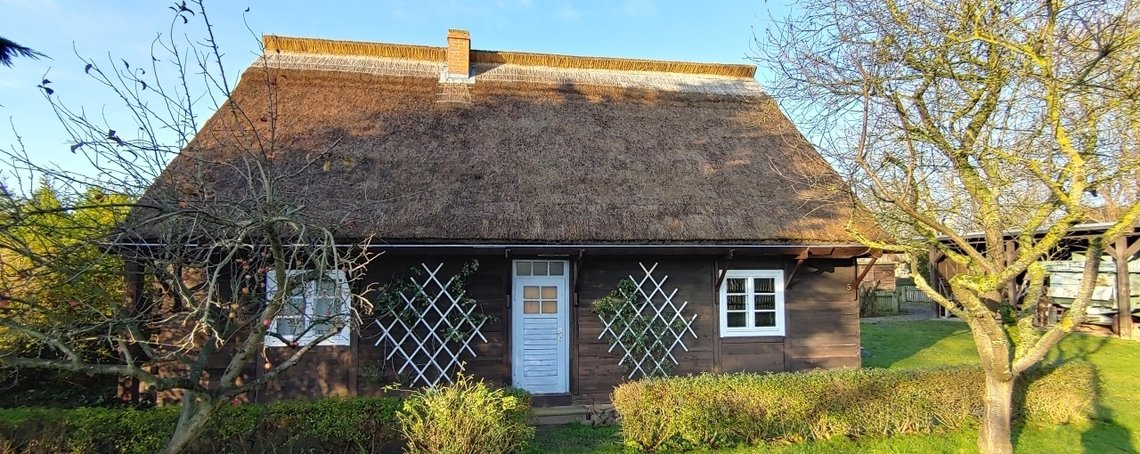
The village miraculously survived World War II unscathed. Residential buildings, the school, the church, and the cemetery have been preserved almost entirely in their original condition.
The Museum Room
Dr. Mykhailo Kostiuk from Lutsk, who has been researching the history of the Germans of Volhynia for many years, came up with the idea of creating a memorial site dedicated to the German settlement of Wincentówka. There was still a room available in a former German residential building, which now houses the village library and the post office. Together with Olga Tybor from the Association of Germans in Volhynia and Vasyl’ Panas, the history teacher from the village of Zavitne, he opened the so-called Museum Room dedicated to German settlement in December 2019.
It now features a small exhibition on the history of the colony, including old maps, a list of homeowners resettled in the winter of 1939–1940, books, old newspapers, and objects of everyday culture from various eras. The museum room is visited by schoolchildren, residents, and guests of the village of Zavitne, as well as descendants of Volhynian Germans from Germany and other countries around the world. So far, it has been sustained solely through volunteer efforts. Visits are possible by prior arrangement with history teacher Vasyl Panas, who also offers guided tours.


