
The village of Linstow


Linstow through the ages
Linstow is a small village with about 270 residents, located on the edge of the Nossentiner Heide Nature Park. The small Nebel River once divided the village into two parts: Linstow, where the manor house stood, and Kieth, where the church was located. The names are of Slavic origin.
Excavations and archaeological finds indicate that the area around Linstow was settled very early on. The place name “Linstow” was first mentioned in a document from the year 1236. In 1281, the coat of arms of “Gerhard von Linstow” was depicted. It featured a helmet with a cross and peacock feathers from the era of the Crusaders. The ancestral estate itself has not been in the possession of the von Linstow family for a long time. In 1735, a member of the family, “Adam von Linstow,” was last listed as the owner. This was followed by many years of estate management by various mortgagees and tenants.
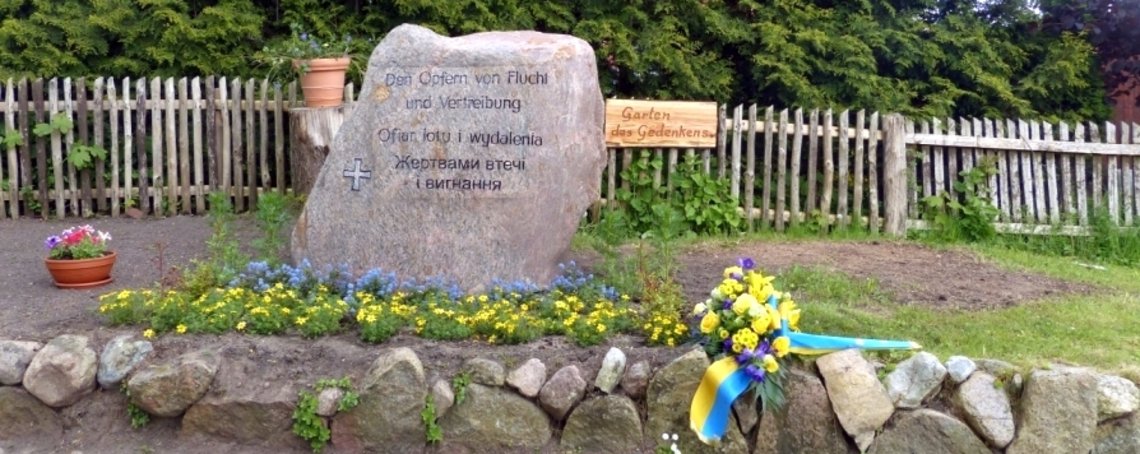
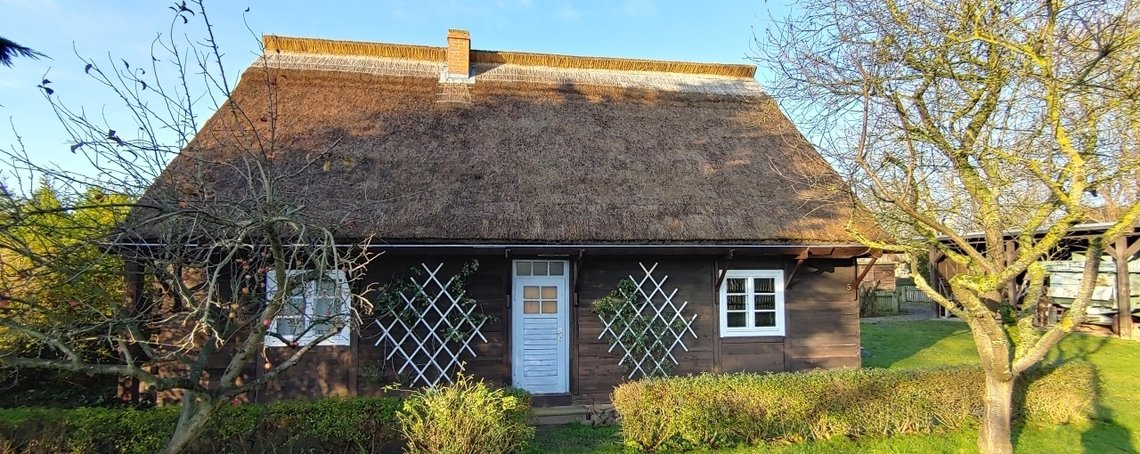
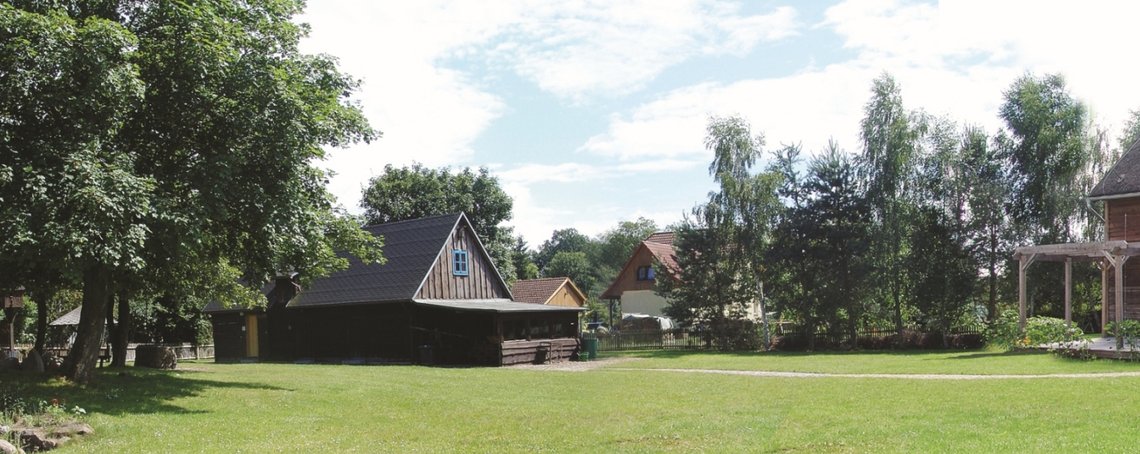
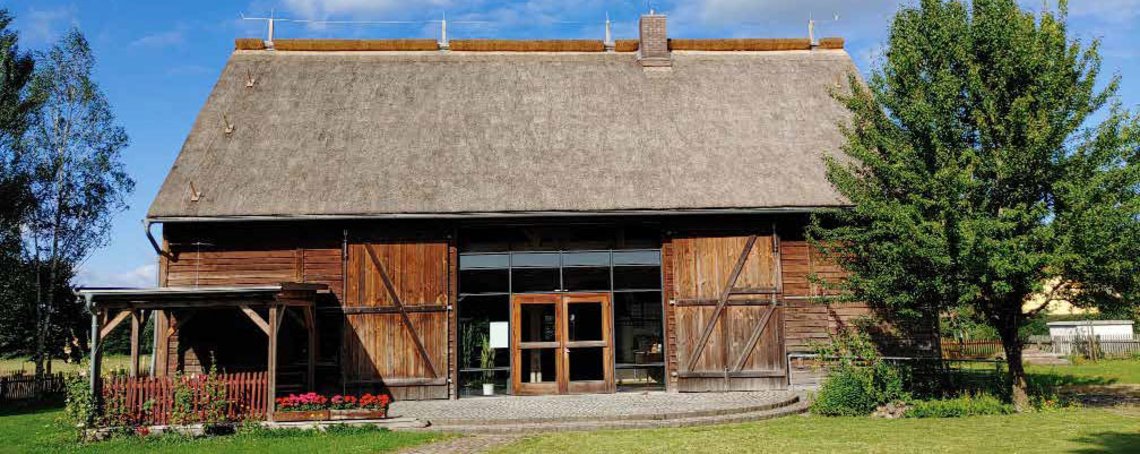
In 1945, Linstow gained its independence as a municipality. As part of the land reform, landless refugees—the majority of whom came from Volhynia—were allocated approximately 10 hectares of land per family by the state, including some forest and meadow. This led to the creation of 73 new settlements, which resulted in the expansion and transformation of the village. It was the Volhynian wooden houses that reshaped the character of the municipality.
The people of Linstow endured difficult and hardscrabble years. During this period, the economic and cultural life of a village or community depended on the size of its associated agricultural production cooperative, or LPG. For individual farmers, however, it marked a further step toward dependence on the state.
In 1974, as part of the industrialization of agriculture in the GDR, a so-called industrial fattening combine was established. For the intensive farming of pigs and cattle, land was needed for feed production and the application of manure. The Linstow LPG was dissolved, and the settlers lost their land once again.
Social conditions stagnated in Linstow, and not even the Berlin-Rostock highway, completed in the 1970s, brought new momentum. It was only after the reunification of the two German states that profound changes also took hold in Linstow. Linstow, today a small village named after an old noble family and an independent municipality, strives to harmonize traditional village idyll with modern tourism.


The parish church
The first documented mention of the Church in Kieth dates back to 1256. It was almost completely destroyed during the Thirty Years’ War. The village church was originally built during the Early Gothic period as a rectangular brick structure.
A renovation took place around 1870. The interior of the church was fitted with a flat beam-and-board ceiling. It is also likely that the square west tower with its pointed spire was added during this renovation phase. In 1879, the tower received its bell, cast by Eduard Albrecht in Wismar.
The portals deserve special mention. Their walls and reveals alternate between wide grooves and corresponding robust quarter-round moldings. The portal still features a capital element in the impost line. Inside the church, a memorial plaque from World War I bearing the text “fallen in the fight against the Bolsheviks” survived the GDR era.
An old stained-glass window, donated by the heirs of the former tenant Fensch of the Linstow estate, has been preserved. Fensch, together with other citizens, rendered outstanding service to improving transportation links to Krakow when he had the dam and bridge across Lake Krakow built.
The church has a small cemetery with large, old trees. Some of the graves are still well-preserved, including the family plot of the tenant farmer Fensch and his family. It is located beneath the stained-glass window mentioned earlier.
Today, the church in Kieth is undergoing restoration in several phases. In 1993, the roof and tower were renovated, and in 2002, the nave was renovated using funds from the municipality and the state.
Services are held on Sundays and holidays. The village church also serves as a bridge between history and the present.